The Ultimate Conversational AI RFP Checklist Guide: 10 Must‑Have Steps for Winning Proposals
On January 19, 2026, an uncompromising guide lands for teams tired of fluffy vendor responses and vague demos. One wants proposals that convert, not slides full of buzzwords. This conversational ai rfp checklist cuts through the slop of boilerplate AI hype and gives practical, step-by-step items to score vendors like a ruthless buyer.
Why a Conversational AI RFP Checklist Matters
One often thinks putting out a one-page RFP will attract the right vendors. It won't. The market is noisy and vendor proposals are slop unless the buyer forces clarity.
A tight checklist enforces comparability, reduces negotiation cycles, and drives measurable ROI. It also helps with SEO and AEO signals when one publishes evaluation criteria for public procurement or partner selection.
How to Use This Guide
Start with the at-a-glance checklist below. Then use the ten-step section to expand requirements into scoring rubrics. Teams should adapt items for GEO, privacy, or compliance needs.
This guide includes examples, scoring templates, and a short case study showing real-world application. He or she can copy-paste sections into an RFP template and run an objective vendor bake-off.
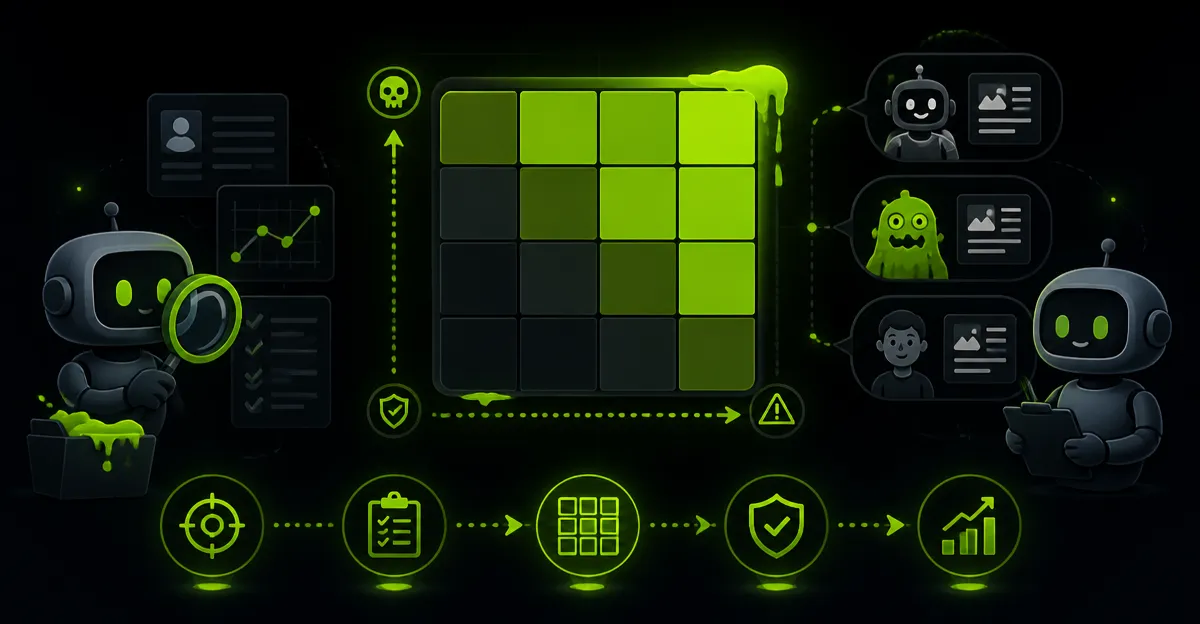
Checklist at a Glance
- 1. Business outcomes and KPIs
- 2. Functional requirements
- 3. llm evaluation criteria
- 4. Data governance & privacy
- 5. Integration & schema markup
- 6. Performance & latency SLAs
- 7. Security & compliance (GEO/AEO)
- 8. Implementation roadmap & costs
- 9. Support, training, and knowledge transfer
- 10. Evaluation, scoring, and negotiation playbook
10 Must‑Have Steps (Expanded)
Step 1 — Define Business Outcomes and KPIs
One must start with outcomes, not tech. Ask: what metric moves the needle — containment rate, AHT, deflection, revenue-per-conversation?
Include baseline metrics and target improvements. For example: reduce support AHT by 20% in six months or increase lead conversion by 15% on chat channels.
Step 2 — Detail Functional Requirements
List precise user journeys and edge cases. Vendors must show flows, handoff logic, and error handling for escalations.
Include examples like multi-intent detection, slot-filling, proactive outreach, and persona-based responses. Demand transcripts of live demos as proof, not just screenshots.
Step 3 — Specify LLM Evaluation Criteria
Don’t treat llm capabilities as mystical. Define tasks: summarization, sentiment detection, hallucination rate threshold, and factuality tests.
Require vendors to run your 20 anonymized queries and return metrics for precision, recall, and hallucination incidents. That's the only way to compare apples to apples.
Step 4 — Data Governance, Privacy, and Compliance
Spell out data retention, anonymization, and dataset provenance. One must include requirements for consent capture and data subject requests.
Ask vendors about schema for PII flags and audit logs. Tie requirements to GEO or AEO constraints, such as data residency in specific regions.
Step 5 — Integration Requirements and Schema Markup
Define APIs, middleware, and expected schema. Vendors should map to your schema markup and existing knowledge graphs.
Demand examples of prior integrations with CRMs, billing systems, and knowledge bases. If SEO benefits matter, include requirements for publishable schema that improves discoverability.
Step 6 — Performance, Scalability, and SLAs
Set clear SLAs for latency, concurrency, uptime, and failover. Ask for load-test reports and incident timelines.
Require penalties or service credits for missed SLAs. Vendors who dodge this are hiding risk — he should filter them out early.
Step 7 — Security, Certifications, and GEO/AEO Concerns
List mandatory certifications: SOC 2, ISO 27001, or regional equivalents. Define encryption at rest and transit and key management standards.
Include GEO and AEO clauses for export controls or regional data handling. Vendors must declare subprocessors and provide a subprocessors map.
Step 8 — Implementation Plan and Cost Transparency
Require a timeline, milestones, and resource allocation. One needs realistic training, testing, and pilot phases.
Demand a clear TCO breakdown: license fees, per-utterance llm costs, integration hours, and ongoing maintenance. No one likes surprise usage bills.
Step 9 — Support, Training, and Knowledge Transfer
Define training needs for agents and admins. Vendors should provide train-the-trainer plans and documentation templates.
Ask for SLA-backed support tiers and an onboarding calendar. Evaluate their knowledge transfer with a sample workshop and acceptance criteria.
Step 10 — Scoring Rubric and Negotiation Playbook
Use numeric scoring: 1–5 for each requirement, weighted by business impact. Publish the rubric so vendors know the rules of the game.
Include negotiation points: trial period, rollback plan, IP of fine-tuned models, and data ownership. It’s a buyer’s market if one runs a strict bake-off.
Evaluation Template (Simple Example)
One can use this quick scoring model: weight requirements by impact and score vendor responses.
- Business Impact (30%)
- Technical Fit (25%)
- Security & Compliance (20%)
- Costs & TCO (15%)
- Support & Roadmap (10%)
Multiply scores by weights and rank vendors. Example: Vendor A scores 82/100 and Vendor B scores 74/100. The numbers make decisions less emotional and more brutal, which is the point.
Real-World Case Study
A midsize ecommerce company used this conversational ai rfp checklist and reduced candidate vendors from 12 to 3 in two weeks. They required a six-week pilot and a 30-day rollback clause.
Vendor selection hinged on llm hallucination metrics and integration to the company's ERP using schema markup. The chosen vendor improved first-contact resolution by 18% in quarter one.
Pros and Cons Comparison (In Practice)
Pros: objective scoring, faster decisions, lower integration risk, clearer SLAs, and better negotiation leverage.
Cons: upfront work to craft the RFP, need for internal alignment, and potential vendor churn if the checklist is unrealistic. One can mitigate these by piloting requirements on a small dataset first.
Final Tips and Common Pitfalls
Don't bury llm costs in a footnote. Demand representative tests. Also, don’t accept vague promises about “industry-leading models” without demonstrable metrics.
Use schema and schema markup to make integrations explicit. Remember GEO and AEO concerns early, or it becomes a legal mess later.
Conclusion
This conversational ai rfp checklist is a practical weapon for teams that want results over feelings. It’s tactical: define outcomes, score consistently, and force vendors to prove claims with data.
He or she who uses this guide will waste less time, negotiate harder, and pick a partner that actually delivers. Ready to crush competitors and stop falling for AI slop?