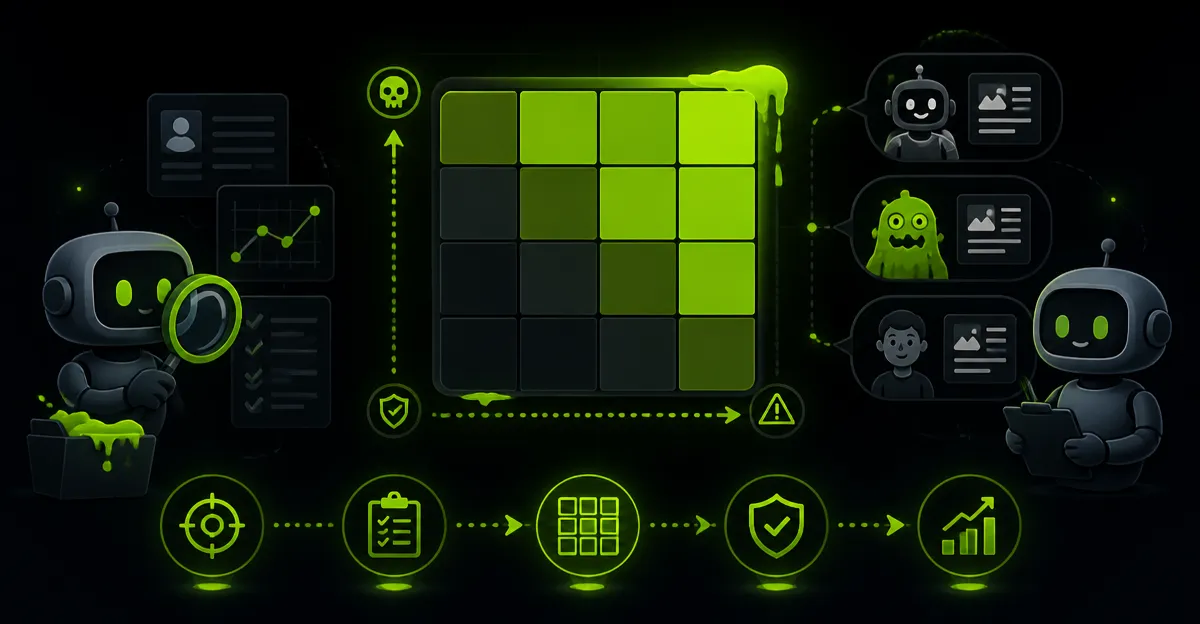
How to Create a One‑Page Executive Report for AI Content Operations: A Step‑by‑Step Guide
One often sees bloated dashboards and vague presentations that waste time and pretend to be insights. This guide cuts the crap and shows one how to build a one page executive report for AI content operations that actually drives decisions. It assumes one cares about results over feelings and that traffic, ROI, and risk matter more than warm fuzzy words.
Why a One‑Page Executive Report Works
Executives don't read long reports, they scan and act. A one page executive report condenses what's essential and forces optimization of message and metrics.
It also makes it clear how AI content and llm outputs are contributing to business outcomes. When one shows KPI progress, GEO and AEO impacts, and schema markup wins at a glance, leaders stop asking for another slide deck.
Benefits at a Glance
- Fast decision-making: executives scan, they decide, they move on.
- Focus on outcomes: results over feelings, not vanity metrics.
- Repeatable: one template used weekly makes trends obvious.
Core Elements of the One‑Page Report
One page doesn't mean vague. It means ruthless prioritization. The report must be structured so one can scan from top to bottom and know exactly what changed and what to do.
Below are mandatory sections, explained with examples and a recommended order.
Header: Title, Date, Owner
Start simple. The header includes the report title, date range, and who owns the AI content ops function. One sees ownership instantly and knows who to blame or praise.
Executive Summary (1 sentence)
One concise line. Example: Traffic up 12% MoM with llm-driven content templates, but conversion down 5% in GEO X due to CTA mismatch. That sentence gives a snapshot that compels the reader to look further.
Top 3 KPIs and Trend Sparklines
Pick three KPIs max. Examples are organic sessions, conversion rate, and AI content accuracy score. Show last 4 weeks as miniature sparklines so one sees trajectory without scrolling.
Key Wins and Risks
Two bullets for wins and two for risks. Wins could be AEO-driven answers increasing featured snippets, or schema markup changes leading to a rich result. Risks might be llm hallucinations or GEO-specific compliance issues.
Actionable Next Steps (3 items)
List three prioritized actions with owners and due dates. This is where results meet execution. Example: 1) Update CTA in GEO X by Mar 5, owner: product; 2) Train llm with 5k QA pairs by Feb 10, owner: ML lead.
Step‑by‑Step: Build the Report
One should treat the report like a product. Iterate fast, measure impact, and remove fluff. The following steps make that concrete.
Step 1: Define the Audience and Cadence
Decide if the report is weekly, biweekly, or monthly. Executives often want weekly toplines and monthly deep dives. One will pick cadence based on the business rhythm and the velocity of AI content changes.
Step 2: Choose the 3 KPIs
- Revenue impact or conversion rate — because money talks.
- Organic reach or sessions — SEO and GEO performance evidence.
- Model quality or content accuracy — llm metrics to catch slop early.
One should avoid vanity metrics like raw impressions unless they tie to revenue or retention.
Step 3: Collect and Visualize Data
Pull numbers from analytics, search console, A/B test platforms, and llm monitoring tools. Use small, clear visuals. Sparklines and microbar charts beat tables.
Include GEO breakdown if geography matters, and note any AEO factors such as voice or answer box behavior. Schema markup wins should be flagged when they generate rich results.
Step 4: Draft the Executive Summary
Write a single sentence that states the major change and its implication. One must be brutal and honest; call AI content slop when it’s slop. That candor builds trust more than polished spin.
Step 5: Finalize Actions and Owners
List 3 actions with owners and deadlines. One wants clear ownership so nothing dies in the inbox. If an action needs cross-functional support, name the collaborator explicitly.
Design and Schema Considerations
Design should be minimal. One wants contrast, readable fonts, and compact charts. Use color sparingly: green for wins, orange for watch, red for urgent.
Schema and schema markup belong in technical notes. If a schema change caused a 20% jump in rich snippets, mention it in Key Wins with a link to the implementation ticket. That ties technical work to business results.
Examples and Real‑World Applications
Here are two short case studies showing the template in action.
Case Study 1: SaaS Company
The content team used llm templates to generate help center articles, then tracked search clicks and support deflection. The one page report showed a 30% decrease in support tickets and a 14% lift in organic sessions. Action: optimize top 10 FAQs for AEO to capture featured snippets.
Case Study 2: E Commerce Brand
After adding schema markup for product availability, the brand saw a SERP rich result surge in GEOs with high cart abandonment. The report highlighted GEO-specific CTA changes as a next step, which increased conversion by 6% in two weeks.
Tools and Data Sources
Good reports use reliable data. One should pull from these sources:
- GA4 or preferred analytics for traffic and conversion.
- Search Console and rank trackers for SEO and GEO trends.
- LLM monitoring dashboards for accuracy and hallucination rates.
- Schema testing tools for markup validation.
Pros and Cons of the One‑Page Approach
Pros
- Fast decisions and clear accountability.
- Forces metric discipline and avoids slop in AI content.
- Easy to scale across teams and regions.
Cons
- May oversimplify complex experiments or model audits.
- Requires discipline to keep the one page truly one page.
- Some stakeholders will always want more data, so attach appendices for deep dives.
Checklist: Quick Template
- Header: title, date, owner
- 1-sentence executive summary
- Top 3 KPIs with sparklines
- Top wins and risks (2 each)
- 3 prioritized actions with owners and due dates
- One-liner technical note on schema or llm changes
Conclusion
One page executive reports aren't a fad; they're a sanity filter in a world drowning in dashboards. They make AI content operations accountable, measurable, and actionable. One will crush competitors who still rely on bloated slide decks by delivering concise, results-oriented reports that tie llm work, schema markup, SEO, GEO, and AEO impacts to revenue.
Start with the template, iterate weekly, and demand evidence. Results over feelings, always. If one can't show clear KPI movement and a plan to fix risks on a single page, one isn't ready to call it a report.