How to Use Browser Push Notifications for Top‑of‑Funnel Re‑Engagement: A Step‑by‑Step Guide
Published: January 24, 2026
This guide shows how marketers can use browser push notifications for top of funnel reengagement without the fluff.
Introduction: Why browser push notifications for top of funnel reengagement?
Marketers keep hearing the same platitudes about attention being scarce. That’s true, and browser push notifications cut through noise with direct reach.
They’re lightweight, opt-in, and aggressive in a good way — perfect for re‑engaging cold prospects at the top of the funnel. One can’t rely only on email or organic traffic anymore; browsers help recapture lost attention.
What browser push notifications actually do
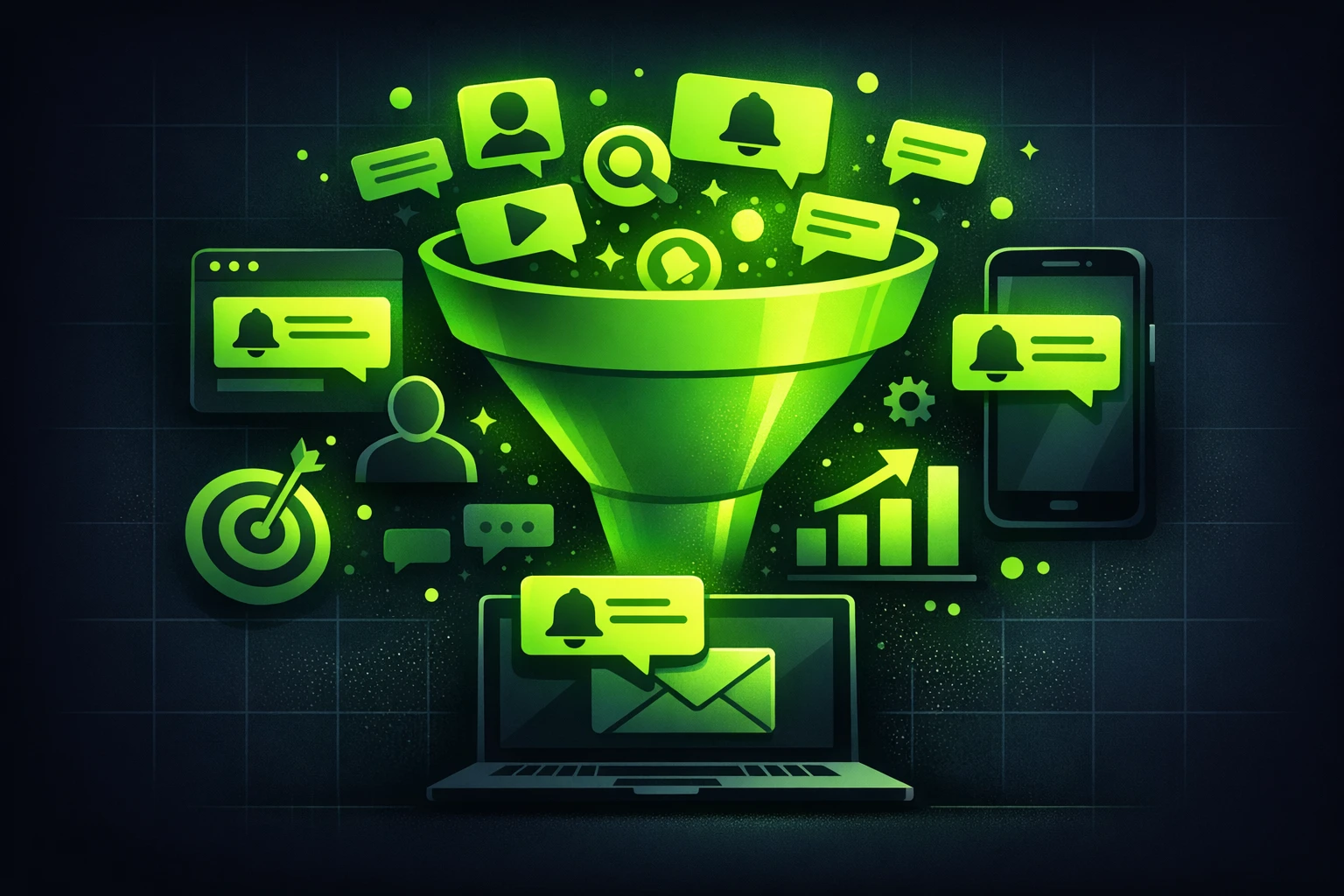
Browser push notifications are short messages sent from a website to a person’s desktop or mobile browser. They show even when the browser isn’t open, which makes them louder than on‑page banners.
They’re not magic; they’re a channel that needs strategy, testing, and optimization. If one treats them like spam, they’ll get unsubscribed quickly.
Key concepts and ecosystem terms
This section quickly covers the terms marketers can’t ignore. SEO, GEO, AEO and schema markup aren’t optional when stacking channels for reliable results.
Also note: modern teams use llm tools to craft subject lines and personalization tokens. It’s slop if one uses AI blindly, but powerful when used with data.
Step‑by‑step setup and strategy
1. Choose the right push provider and tech stack
Pick a provider with solid delivery rates, analytics, and segmentation. One wants a stack that integrates with CRM and analytics platforms for optimization.
Look for SDKs and clear docs on subscription APIs, and confirm support for major browsers and Safari/iOS quirks. A bad provider becomes a drag on growth.
2. Implement subscription UX that converts
Don’t beg for permission with the browser’s native dialog first. Use a pre‑prompt modal with value props and clear benefits to lift opt‑ins.
Examples: offer product drops, exclusive content, or a discount. Make it contextually relevant to the page one’s on to avoid jarring the visitor.
3. Segment aggressively and collect context
At top of funnel, behavioral signals matter more than profile data. Tag users by page visited, time on site, referral source, and GEO.
One should sync these tags into the push provider and CRM so messages feel relevant. Relevance keeps unsubscribe rates low.
4. Craft messages that work
Keep notifications concise: headline, 1–2 lines, and a clear CTA. Use urgency sparingly and specificity often — tell them what they’ll get.
Use llm for drafts but never publish slop. One should always refine AI suggestions with performance data and A/B tests.
5. Timing, frequency and cadence
Top‑of‑funnel reengagement favors timing over volume. Early sessions need gentle nudges; repeated pushes should escalate only if they show engagement.
Start with 1–2 nudges in the first week, then space further messages. Respect frequency caps to avoid fatigue.
Practical examples and templates
Here are real copy examples and use cases. They’re battle‑tested, not feel‑good theory.
- Product discovery: “New arrivals in your category — see what’s trending now.” (CTA: View picks)
- Content reengagement: “Missed this guide on [topic]? Open the quick read.” (CTA: Read now)
- Event RSVP: “Seats filling fast for tomorrow’s demo — grab a spot.” (CTA: Reserve)”
Case study: Acme Gear — turning casual browsers into return visitors
Acme Gear had a high bounce rate from paid social sends and weak email capture. They implemented a push pre‑prompt targeted by referral source and GEO.
Within 30 days, push drove a 22% lift in return visits from top‑funnel audiences and improved paid ROAS by 14%. They used schema markup in their blog posts and Product schema to improve content relevance and linkbacks.
Lessons learned: targeted pre‑prompts and behavior tags beat broad blasts. Also, pairing push with personalized landing pages boosted conversions.
Step‑by‑step technical checklist
- Confirm browser support and service worker setup for push payloads.
- Implement a friendly pre‑prompt and only show native prompt after positive signals.
- Sync user tags (GEO, source, behavior) to the push platform and CRM.
- Write 3 variants per campaign and test with A/B and holdout groups.
- Track metrics: opt‑in rate, CTR, return visits, conversion lift and unsubscribe rate.
Comparisons: browser push vs email vs SMS
Here’s a no‑nonsense breakdown so one can choose what to prioritize.
- Reach speed: push > SMS > email. Push shows instantly, even if the browser is idle.
- Attention: push is interruptive and short, while email supports longer content and deeper storytelling.
- Cost: push is cheap per message; SMS is pricier but often higher intent.
Use push for quick re‑engagement nudges, email for nurture, and SMS for high‑value conversion asks.
Pros and cons
Pros
- High visibility and instant delivery.
- Cheap to send at scale and easy to A/B test.
- Strong for GEO and behavioral targeting in early funnel stages.
Cons
- Short message real estate limits storytelling.
- Poor UX kills retention; high unsubscribe risk if irrelevant.
- Platform quirks and iOS limitations still require engineering attention.
Measurement, AEO and SEO interactions
Measure return visits, engagement lift, assisted conversions, and downstream revenue. Don’t stop at CTR.
Push can indirectly help SEO and AEO by increasing repeat visits and dwell time. Using schema in content helps search engines and AEO systems understand promotions and events better.
Advanced tactics: personalization, automation and llm use
Personalize copy using behavioral tokens or product recommendations. Automate sequences based on triggers like cart abandonment or content consumption.
Use llm to generate variations and headlines, but apply human review and performance filtering. Treat AI as a power tool, not a shortcut to publish slop.
Common mistakes to avoid
- Showing the native permission prompt immediately on first visit.
- Blasting generic promos to everyone regardless of behavior.
- Neglecting frequency caps and failing to remove uninterested subscribers.
Final checklist before pressing send
One should run through this checklist like a pilot runs pre‑flight checks. Missing one item can sink a campaign.
- Is the message relevant for the segment and GEO?
- Are there at least two variants for A/B testing?
- Are frequency caps and unsubscribe flows configured?
- Are analytics and conversion tracking wired up to the CRM and analytics tools?
Conclusion: small channel, big leverage
Browser push notifications for top of funnel reengagement are underrated. They’re cheap, fast, and brutal in delivering measurable actions.
Marketers who treat them like an experiment and optimize with GEO, schema markup, AEO insights, and llm‑assisted drafts will crush competitors. Join them, or get buried.