How to Build High-Converting Interactive Quiz Funnels for B2B Lead Generation: A Step‑by‑Step Guide
Date: January 21, 2026
Introduction
One can stop pretending static landing pages win enterprise hearts forever; interactive quiz funnels for B2B lead gen actually move the needle. This guide is brutally honest about what's slop and what's a weapon, and it shows how to build, test, and scale a quiz funnel that converts.
Expect concrete steps, schema markup examples, LLM tricks, GEO and AEO considerations, and optimization tactics that crush competitors. Results matter more than feelings, so the team will focus on metrics from day one.
Why Interactive Quiz Funnels Work for B2B
Psychology and Conversion Mechanics
Quizzes turn boring forms into mini experiences, and people like progress and discovery. That small dopamine loop massively increases engagement compared with static forms.
For B2B, one can frame quizzes as diagnostics or ROI calculators to justify sharing details, which lifts conversion rates and improves lead quality. The funnel now earns permission rather than begging for it.
Data Capture vs Lead Quality
Interactive quizzes collect richer behavioral data—answers, time per question, and choices—so one knows what to serve sales. That extra context fuels better segmentation and follow-up sequences.
Quality beats quantity for B2B. One quiz can produce fewer leads but with 2x to 5x higher SQL rates when scored and routed correctly.
Planning the Quiz Funnel
Define Objective, Audience, and KPIs
Start with a measurable objective: MQLs per month, demo requests, or pipeline value. The team maps content and asks what metric counts as a win.
Define buyer personas and GEO targets early, since GEO affects language, compliance, and messaging. KPIs must be tracked in CRM and analytics for attribution.
Choose Quiz Type and Outcome Strategy
Pick between diagnostic, assessment, or recommendation quizzes depending on intent. Diagnostic quizzes work well for technical buyers, while ROI calculators fit procurement conversations.
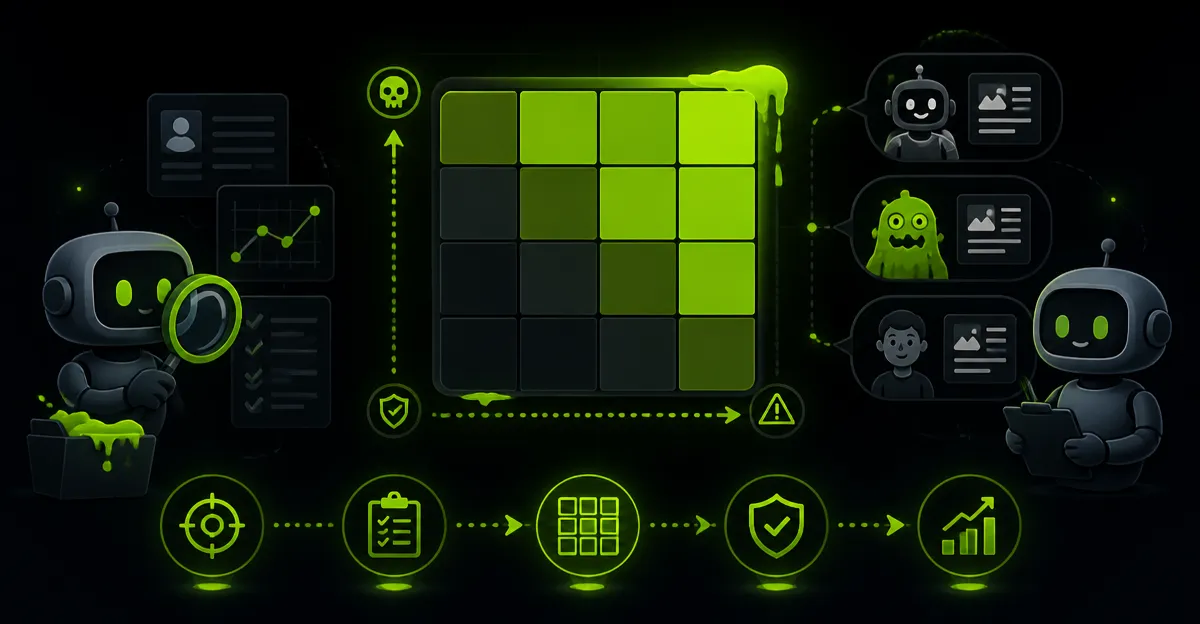
Outcomes should be actionable and tied to routing rules: high-score = sales outreach, medium = nurtured by content, low = educational drip. That clarity prevents wasted sales time.
Build the Quiz: Step-by-Step
Step 1: Craft Questions and Outcomes
Write 6–10 focused questions that reveal intent and fit the sales rubric. Use ordinal or categorical answers to keep scoring deterministic and simple for automation.
Map each answer to scores and tags. For example, a SaaS security quiz might tag "compliance" and score "purchase intent" separately for routing.
Step 2: Lead Capture and Progressive Profiling
Don't gate everything at once. Use progressive profiling: capture email mid-quiz, then ask company size and role at result. That approach saves conversions and improves data quality.
Offer immediate value on the results page—downloadable report, personalized benchmark, or short video. The team will get more honest contacts when the exchange feels fair.
Step 3: Technical Setup and Schema Markup
Use a quiz tool or custom build, integrating the funnel with CRM and automation. Ensure data flows include tags, score fields, and event triggers.
Expose result pages to search engines with schema and schema markup to help AEO and SEO. Below is a JSON-LD example for a quiz result that can be adapted to the site.
{
  "@context": "https://schema.org",
  "@type": "WebPage",
  "name": "Security Readiness Quiz Result - Acme",
  "description": "Personalized security readiness score and recommendations.",
  "mainEntity": {
    "@type": "Quiz",
    "name": "Security Readiness Quiz",
    "educationLevel": "Professional",
    "interactionStatistic": {
      "@type": "InteractionCounter",
      "interactionType": "https://schema.org/AnswerAction",
      "userInteractionCount": 1
    },
    "result": {
      "@type": "Thing",
      "name": "Score: 78 / 100",
      "url": "https://example.com/quiz/result/12345"
    }
  }
}
That snippet is a template; one should adjust fields and use correct types for the platform. Schema markup helps AEO and can improve discoverability for targeted queries.
Scoring, Segmentation, and Routing
Lead Scoring Model Example
Build a simple additive model: intent score + fit score + engagement modifiers. For instance, high intent (40), ideal company size (30), and product page visit (+10) gives 80+ to prioritize.
Keep thresholds transparent to the sales team and iterate monthly. One will find odd edge cases fast once the funnel is live.
Routing Rules and Sales Workflows
Use automation to tag and assign leads. High-value leads hit a Slack alert and a sequence that includes a tailored report and a suggested meeting time.
Medium leads go into content nurturing with a follow-up quiz or whitepaper. Low leads receive educational tracks and are re-scored after new interactions.
Optimization and Testing
A/B Testing and KPI Tracking
Test one variable at a time: headline, number of questions, gating point, or CTA. Measure conversion rate, SQL rate, and backend revenue impact to avoid vanity wins.
Run tests long enough for significance. For B2B, that might mean 4–12 weeks depending on traffic and sales cycle length.
SEO, AEO, and GEO Considerations
Optimize quiz landing pages for SEO intent and AEO signals by answering queries directly and using schema markup. That boosts organic discovery and featured answer potential.
GEO targeting matters: tailor outcomes and benchmarking to regional standards and local compliance. One will see better conversions when language and comparisons feel native.
Use of LLMs for Personalization at Scale
LLMs can generate personalized result narratives, on-the-fly micro-copy, and email follow-ups based on quiz answers. That reduces creative bottlenecks and scales personalization.
However, validate outputs and avoid slop: LLM drafts must be audited for accuracy, tone, and alignment with product claims before sending to prospects.
Case Studies and Real-World Examples
Example 1: SaaS Security Vendor
A mid-market SaaS firm launched a compliance quiz and saw a 3x lift in demo requests versus a gated whitepaper. The quiz produced fewer leads but a 4x higher SQL conversion after routing by score.
They used schema markup for results pages and targeted GEO clusters in the EU and US, increasing discovery for AEO queries like "security readiness checklist".
Example 2: B2B Services Firm
A consultancy used a benchmarking quiz to segment enterprise vs. mid-market prospects. High-fit enterprises received a bespoke report and sales outreach within 24 hours.
The result: shorter sales cycles and a 30% higher close rate for leads that came through the quiz funnel compared with inbound forms.
Pros and Cons
- Pros: Higher engagement, richer data, better lead qualification, and stronger personalization opportunities.
- Cons: More build complexity, ongoing maintenance, potential for poor UX if over-gated, and the need to police LLM outputs.
Conclusion and Next Steps
Interactive quiz funnels for B2B lead gen are a weapon when done right, combining data, UX, and automation to produce qualified pipeline. One should start small, measure hard, and iterate fast.
The team should prototype a single-use case in 2–4 weeks: design questions, implement score routing, add schema markup, and plug into CRM. Iterate until the funnel reliably creates SQLs and then scale across GEOs and segments.
Results over feelings: build the quiz, run the numbers, and let the pipeline decide who was right.