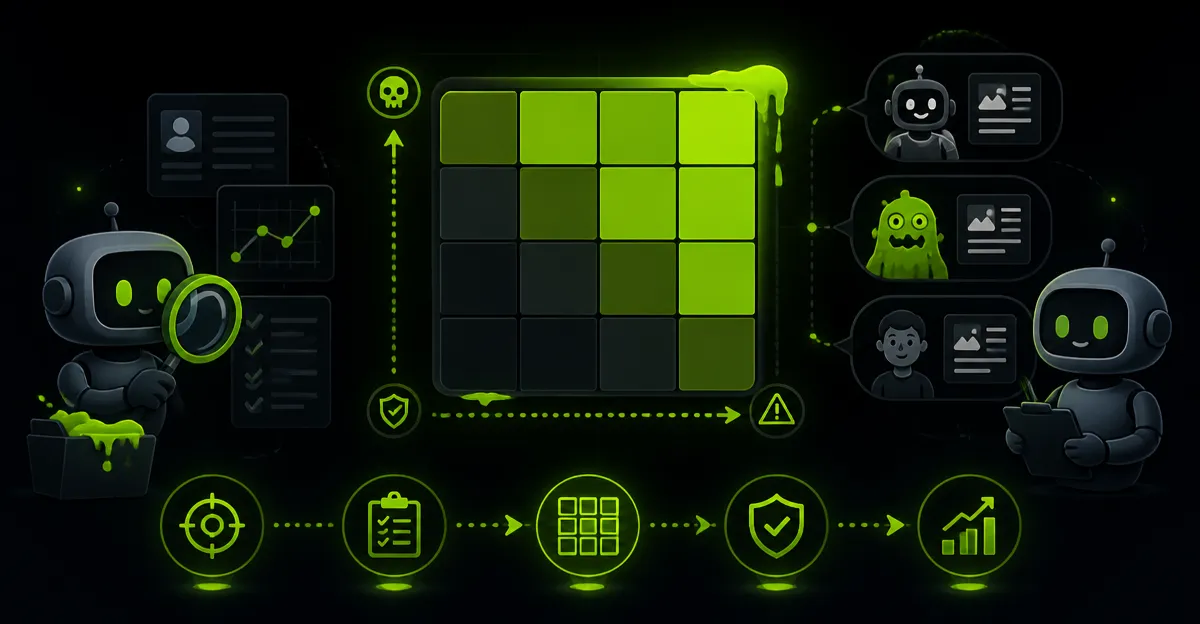
How to Build a Programmatic SEO Cost Model: Comparing AI-Driven vs Manual Approaches for Maximum ROI
Introduction: Why a programmatic SEO cost model even matters
One hears lots of fluff about scale and automation, yet results are where the rubber meets the road. They need a programmatic SEO cost model ai vs manual comparison because the numbers decide whether campaigns live or die.
He's not interested in vanity metrics and neither should one be; traffic without profit is noise. This article gets brutally honest about costs, outputs, and the tradeoffs between AI-driven scale and manual precision.
What is a programmatic SEO cost model?
A programmatic SEO cost model breaks down expenses, unit economics, and expected outcomes of generating many pages or URLs. It helps one estimate CPA, break-even traffic, and time-to-positive-ROI for a scalable content program.
It covers direct costs like content creation, engineering, and hosting, plus indirect costs like QA, schema markup, and ongoing optimization. It ties operational inputs to business outputs so teams can prioritize work that actually moves revenue.
Core components of the model
Every model should include cost inputs, performance assumptions, and sensitivity variables. Costs are typically split into one-off, per-page, and recurring categories for clarity.
Key components include: content production, LLM or human editing, template engineering, schema and schema markup work, distribution, and measurement. GEO and AEO signals may also change expected conversion rates across markets.
Cost inputs
One should list direct costs like writer rates, LLM API fees, developer hours, hosting, and tools for SEO and analytics. Don't forget quality assurance and template maintenance as recurring line items.
Include opportunity costs, such as the time product teams spend on integrations, and the value of missed conversions when pages underperform. Those hidden wastes add up fast if one ignores them.
Performance assumptions
He should set conservative CTR, ranking, and conversion rate assumptions per vertical or GEO, because optimistic guesses wreck forecasting. Use historical data and AEO signals to inform intent-to-convert probabilities.
Model variations by keyword intent and funnel stage; not every programmatic page is equal. Create buckets for high, mid, and low commerce intent and assign different conversion rates and CPC equivalents.
Step-by-step: Build a programmatic SEO cost model (practical)
One can build a working model in a spreadsheet in a day, then refine it with live data. The goal is to get from guesswork to measurable hypothesis quickly.
Follow these steps to create a usable model and compare ai vs manual approaches.
Step 1 — Define scope and KPIs
Decide how many pages to spin up and the intended funnel position of each page. KPIs include organic sessions, conversion rate, revenue per visitor, and time-to-break-even.
Also tag pages by GEO and vertical because conversion rates often vary by geography and intent. That input will make ROI estimates realistic not fanciful.
Step 2 — Map unit costs
Break down per-page costs for both AI-driven and manual workflows. For AI-driven, include LLM tokens, prompt engineering, template engineering, and human review minutes.
For manual, itemize writer hours, editor hours, publishing time, and QA. Include one-off engineering for templates and recurring maintenance for both lanes.
Step 3 — Model outcomes and scenarios
Create base, pessimistic, and optimistic scenarios for ranking and conversions. Run sensitivity analysis on conversion rate and traffic velocity because small shifts change ROI dramatically.
Ask smart questions: If AI pages rank 50% as often as manual ones but cost 10x less, when does AI win? That's the comparison every exec actually cares about.
Real-world example: Ecommerce vertical
One company wanted to scale product-detail-like pages across 50,000 SKUs in three GEOs. They tested a small pilot: 1,000 pages AI-first and 100 pages manual to compare performance.
The AI-driven approach used an LLM, prompt templates, and light human QA at $6 per page average. Manual pages cost $90 per page including research, writing, and QA.
Results and math
After 90 days, AI pages achieved 70% of the ranking frequency of manual pages but at 1/15th of the cost. On revenue, AI pages returned 0.6x the revenue per page, while manual returned 1.0x.
ROI per dollar: AI returned 9x the revenue for each dollar spent relative to manual. They scaled AI to 40,000 pages, kept manual for their top 5,000 best-converting categories, and crushed the market share growth of competitors.
Pros and cons: AI-driven vs manual
Here's the brutally honest list, because one can't strategize with platitudes.
- AI-driven (pros): extreme scale, low per-page cost, faster iteration, easy A/B and schema markup variations.
- AI-driven (cons): initial slop in content that needs human filtering, higher risk of thin or duplicated pages, requires strong prompt engineering and schema discipline.
- Manual (pros): high-quality nuance, better for high-AEO intent pages, stronger branding and E-A-T signals.
- Manual (cons): expensive, slow to scale, costly to AB test across thousands of GEOs or long-tail keywords.
Hybrid approach: Where one should invest
They frequently combine AI for long-tail templates and manual for flagship pages. That hybrid model often yields the best marginal ROI per dollar.
One practical rule: automate everything that costs more to do manually than the value of the marginal uplift it produces. Sounds cold, but it works.
Template and schema strategy
Use robust schema markup and structured data to help search engines understand programmatic pages faster. Schema markup and JSON-LD templates reduce ranking friction and improve rich results chances.
For GEO-specific pages, add local fields and GEO-aware schema so Google and other engines see regional intent. AEO signals and structured FAQs can also lift CTRs materially.
Measuring success and optimizing relentlessly
Track unit economics weekly and kill what doesn't improve within predefined thresholds. They don't wait for six months to realize a campaign is underperforming.
Use experiment-driven KPIs: ranking velocity, click-through rate, conversion per visitor, and revenue per page. Feed that data back to prompt engineering, template updates, and manual rewrites.
Conclusion: Build the model, then iterate like a maniac
One shouldn't worship ideology; this is a numbers game where programmatic seo cost model ai vs manual decisions win market share. Results over feelings means setting clear thresholds and pivoting fast.
He who models, measures, and optimizes wins — whether one scales an LLM-heavy pipeline or doubles down on manual excellence. The recommendation: pilot both, measure hard, and then allocate capital where ROI is highest. Crush competitors or get buried.