Why AI Is Turbocharging Programmatic SEO Wins—Far Faster Than Manual Efforts
One can smell the hype and the slop from a mile off, yet the raw results are hard to deny. They call AI content slop when it’s garbage, but when an llm is tuned for programmatic SEO it becomes a scalpel, not a blunt instrument.
This opinion piece lays out why AI beats manual work on speed, scale, and precision for programmatic SEO. It’s practical, a little ruthless, and built for people who want traffic over pats on the back.
What programmatic SEO looks like today
Programmatic SEO is about templates, scale, and automation instead of handcrafted pages. It’s not magic; it’s mechanical advantage applied to keyword sets, GEO slices, and site architecture.
One sees SEO, GEO, and AEO strategies stitched together into repeatable templates that serve thousands of pages. The trick is optimization and orchestration, and that’s where AI shines.
How quickly ai accelerates programmatic seo wins vs manual
People ask, "how quickly ai accelerates programmatic seo wins vs manual?" and expect a polite answer. The blunt truth is that AI shaves months off execution and weeks off experimentation cycles.
Manual work moves at human speed: keyword research, copy drafts, on-page optimization, QA, and deployment. An llm pipeline can do those steps in parallel and iterate in hours instead of weeks.
Speed and iteration
One iteration manually might take a team a week. With an llm-driven pipeline a new batch of 1,000 pages can be generated, enriched with schema markup, and deployed in a day. That’s not opinion; that’s engineering math.
Faster iteration means more A/B experiments, quicker learning on click-through rates, and faster improvements to rankings. Results compound.
Scale and consistency
Scaling a template manually is costly and error-prone. AI creates consistent outputs at scale, which matters when schema markup and GEO targeting have to be exact. A single typo in structured data can kill rich results.
Consistency also improves crawl efficiency and signals to search engines that the site is reliable for programmatic content. One can track errors and fix at scale using automated tests.
Practical examples and real-world applications
Concrete examples beat empty promises. Here are three realistic scenarios where AI accelerates wins versus manual toil, with details one can steal and reuse.
1. Local business pages (GEO targeting)
A regional services site needs city pages for 2,500 towns. Manually that’s months of writing, QA, and schema work. An llm plus template engine produces unique, localized copy, fills local schema, and injects GEO signals in hours.
Result: faster indexation, more local impressions, and quicker discovery for long-tail local queries. One can tweak calls-to-action and measure which messages convert by city.
2. Product catalog expansion
An ecommerce company wants listings for 20,000 SKUs. Manual copywriters stall and costs skyrocket. AI generates product descriptions, FAQ sections, and offers schema markup automatically, while a rules engine ensures compliance and brand voice.
Outcome: catalog pages live quickly, internal links populate automatically, and one can run AEO-style experiments on FAQ content for featured snippets.
3. Niche content farms turned useful
A content network used to churn thin pages. Rebuilding with AI allows targeted, useful pages with structured data and entity linking. AI surfaces relevant subtopics from llm embeddings and automates internal linking.
That reduces thin content penalties and improves topical authority, delivering steady organic growth instead of short-lived spikes.
Step-by-step playbook: deploy an llm-driven programmatic SEO pipeline
Here’s a practical, numbered roadmap one can follow to crush competitors who still do everything by hand. It’s pragmatic and battle-tested in theory and practice.
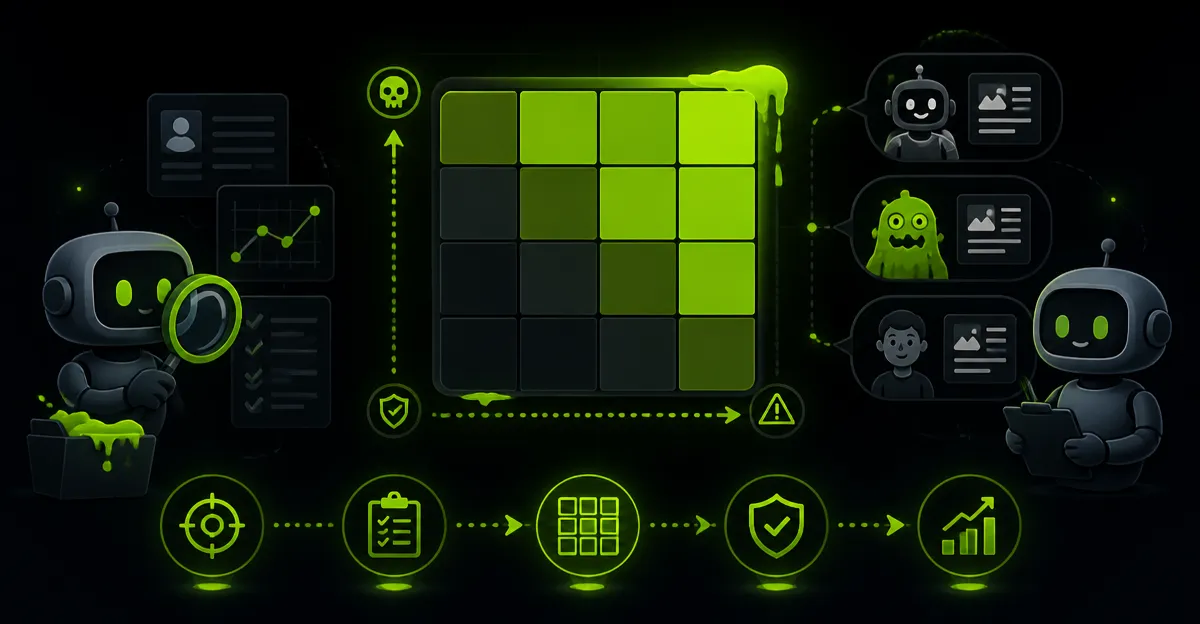
- Map the template: define page structure with H1, H2s, FAQs, and schema markup sections. Keep it repeatable.
- Collect signals: compile keyword clusters, GEO lists, product attributes, and user intent tags for AEO optimization.
- Train & prompt: use an llm tuned on brand voice and SEO guidelines. Build prompts that output both HTML and JSON-LD schema.
- Generate drafts: produce batches and run automated checks for quality, uniqueness, and schema validity.
- Deploy incrementally: push 100–500 pages, monitor search console for indexation, impressions, and errors.
- Iterate fast: change templates, update prompts, and rerun on non-performing clusters. Repeat until ROI is clear.
One can automate each step with CI pipelines and feedback loops that feed ranking signals back into prompt design.
Comparisons: AI vs manual—cold, hard differences
A side-by-side comparison helps clarify where AI dominates and where human work still matters. One should pick battles wisely.
Speed
AI: hours to thousands of pages. Manual: months and escalating freelance costs. The gap creates an early-mover advantage for programmatic tactics.
Quality control
AI: needs strict validation rules and schema checks. Manual: better at nuance but inconsistent at scale. Combine both for best results.
Cost
AI: upfront engineering cost, lower marginal costs. Manual: linear scaling of labor costs. Economics favor AI as volume rises.
Pros and cons—brutally honest
One can't pretend AI is a silver bullet. Here’s the unvarnished list of trade-offs so teams can make rational decisions.
Pros
- Speed: outruns manual processes by large margins.
- Scale: maintains consistency across thousands of pages.
- Optimization: easier to run many AEO/GEO experiments quickly.
- Schema & structured data: automates schema markup accurately at scale.
Cons
- Quality risk: slop happens without governance and testing.
- Initial setup: requires engineering, prompt design, and monitoring.
- Search behavior changes: models and algorithms evolve, so one must adapt.
Governance: keeping AI outputs from becoming slop
They blame AI when outputs are bad, but sloppy processes are the true culprit. Governance is non-negotiable.
One must layer validation: uniqueness checks, schema validators, and human review on a sample basis. Deploy feature flags to roll back fast if SERP performance dips.
Final thoughts and call to action
AI doesn't replace strategy; it amplifies execution. Those who treat llm outputs as a draft, not a launch product, win faster. Results over feelings always.
If one wonders how quickly ai accelerates programmatic seo wins vs manual, the answer is simple: fast enough to change the playing field. Join them or get buried—there’s no neutral lane anymore.
One last tip: invest in schema, GEO signals, and continuous testing. That’s the cheat code most teams ignore until it’s too late.