How to Boost Product Category Rankings with Powerful Storytelling: A Step‑by‑Step Guide
Date: January 2, 2026
Introduction — why storytelling for product category SEO actually matters
One hears the platitudes: content is king, quality over quantity and all that slop from AI that pretends to be strategy. This guide calls that slop out and gives a brutal, practical path to using storytelling for product category SEO to move real rankings and revenues.
Brands that treat category pages like catalog dumps get catalog results — low engagement, thin AEO signals and weak GEO relevance. Story-driven categories do more: they improve dwell, clicks, conversions and give schema markup real context so search engines can rank them higher.
H2: The strategic case — what storytelling changes in SEO
Storytelling isn't fluff; it changes user signals that search engines track, like click-through rates and time on page. It also feeds AEO (Answer Engine Optimization) and LLM-driven features by creating clear, structured narratives that an llm can parse for answers.
When one uses storytelling for product category SEO, site architecture, schema and GEO targeting work together instead of fighting each other. The result is category pages that search engines treat like mini-brand hubs instead of thin list pages.
H2: Understand the category narrative
H3: Define the audience and the problem
Start by mapping who the category serves and what's the core problem they want solved. Brands often confuse audience with buyers; one must identify intent segments across awareness, consideration and purchase stages.
For example, an outdoor gear retailer will have weekend hikers, thru-hikers and family campers — each needs a different narrative thread on the same category page to capture specific SEO queries.
H3: Competitive storytelling audit
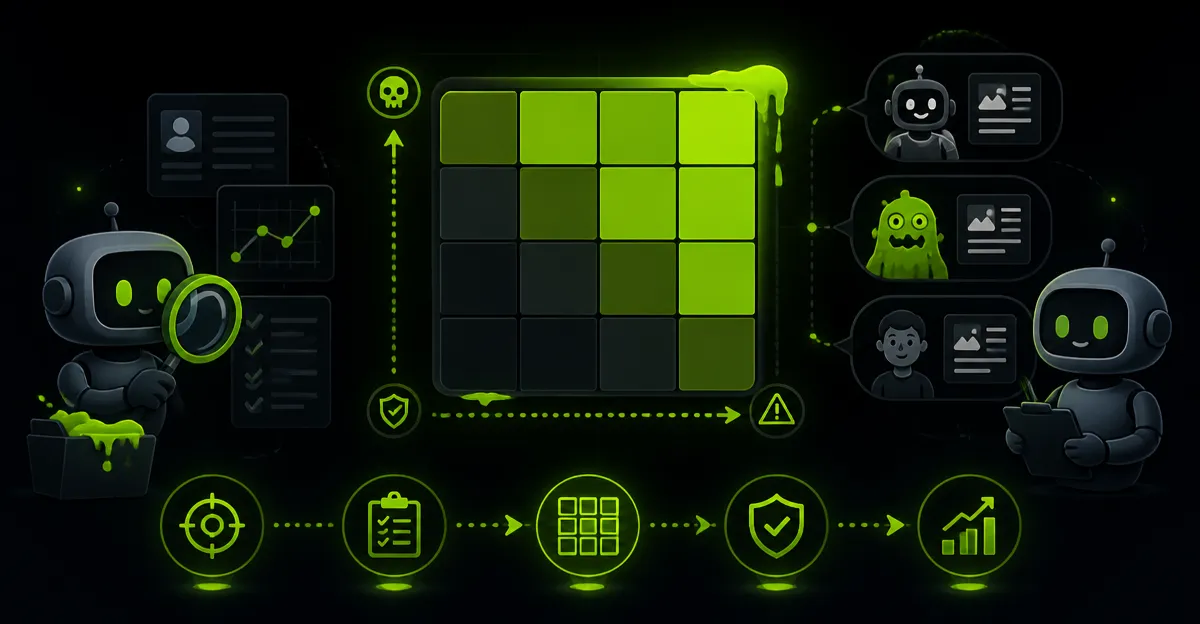
Audit top-ranking category pages and note the narratives they use: hero stories, technical validation, lifestyle proof. This is not creative school — it's reconnaissance for optimization.
One should log differences in headings, FAQ structure, schema usage and multimedia. These elements become the blueprint for a superior category narrative that beats competitors.
H2: Craft the story elements for product categories
H3: Hero, conflict and resolution mapped to search intent
The hero is the shopper, conflict is the pain (cold feet, wrong size, durability), and resolution is the product family that fixes it. Map those to keyword clusters and internal links for a coherent experience.
For instance, a skincare category can present a hero (sensitive-skin consumer), conflict (redness, irritation) and resolution (a curated line with clinical proof), aligning headings to targeted SEO phrases.
H3: Proof, social and technical validation
Data points, reviews and third-party badges convert narrative into trust signals. Those trust signals feed schema markup and AEO features that can appear as rich snippets.
Brands should bake in micro-stories: a hero quote, a short case study and product comparisons that answer searcher questions to satisfy LLM and AEO extraction.
H2: Apply storytelling to on-page SEO
H3: Titles, metas and structured headings
Headlines should lead with the customer's problem, not the SKU list. One should craft title tags and meta descriptions that hint at the narrative to improve CTR and impressions.
Use H2s and H3s to sequence the story — problem, options, proof, call-to-action — so both humans and search engines can skim the narrative arc.
H3: Category descriptions that convert and rank
Write category copy with short narrative blocks that answer searcher intent and include long-tail variations of storytelling for product category SEO. Keep the first 100 words sharp and intent-focused for AEO snippets.
Interleave product highlights, buyer personas and how-to tips to serve both informational and transactional intent without bloating the page.
H3: Using schema and schema markup effectively
Schema markup isn't just for products; it's for the story context around them. One should use Product, AggregateRating, FAQPage and BreadcrumbList to help search engines understand the narrative elements.
Below is a minimal JSON-LD example for a category with FAQ that supports storytelling and AEO extraction.
{
  "@context": "https://schema.org",
  "@type": "CollectionPage",
  "name": "Trail Running Shoes — Comfort & Durability",
  "description": "Curated trail running shoes for weekend warriors and ultra runners: fit tips, durability tests and top picks.",
  "mainEntity": [{
    "@type": "FAQPage",
    "name": "How to choose trail running shoes",
    "mainEntity": [{
      "@type": "Question",
      "name": "What's the best shoe for wet trails?",
      "acceptedAnswer": { "@type": "Answer", "text": "Choose sticky-rubber soles with rock plates for protection." }
    }]
  }]
}
H3: Internal linking and content hubs
Use category pages as hubs that tell the story and link to product pages as chapters. Internal links should carry contextual anchor text that supports the narrative instead of generic "shop now" links.
That helps distribute topical authority, improves GEO relevance when paired with local pages, and feeds LLMs with clean semantic signals that power AEO answers.
H2: Technical considerations — GEO, AEO and llm signals
GEO matters when categories have regional intent, like "best winter boots in Vermont." One should localize narratives with regional examples and schema for local storefronts.
For AEO and llm signals, structured content, short answers and clear Q&A blocks are essential. Brands shouldn't rely on raw llm output; one must edit the slop and inject real expertise.
H2: Measurement, testing and a mini case study
Track CTR, organic traffic, SERP features earned and conversion rate for each category page. These metrics prove whether storytelling for product category SEO moves the needle or just makes pages prettier.
Mini case study: A mid-size outdoor brand created a narrative-led hiking boots category with buyer personas, fit guides, and FAQ schema. Within 12 weeks they saw a 32% lift in organic clicks and a 15% improvement in conversion from category to product pages in testing conditions.
H2: Step-by-step implementation checklist
- Audit top competitors and map narrative gaps to keyword clusters.
- Define 2–3 persona-driven storylines per category.
- Write hero intro (50–100 words) and 3 short narrative blocks with H2/H3s.
- Add FAQ and Product schema markup, then test with Rich Results tool.
- Internal-link to 4–6 product pages with contextual anchors.
- Run A/B tests for meta/snippet variants and measure CTR changes.
H2: Pros, cons and common mistakes
Pros: storytelling increases engagement, supports AEO and helps schema perform better for SERP features. It also differentiates categories from commodity listings and improves internal linking efficiency.
Cons: it's resource-intensive and must be updated as products change. The worst mistake brands make is writing one long narrative paragraph that neither humans nor llms can parse, which kills both UX and SEO.
H2: Conclusion — join them or get buried
Storytelling for product category SEO isn't optional anymore; it's the difference between pages that rank and pages that rot. One should be unapologetically results-obsessed: create stories that drive clicks and conversions, not vanity metrics.
Brands that crush competitors will treat category pages like narratives with schema markup, GEO-aware localization and llm-smart microcopy. Edit the slop, run the tests and dominate the SERPs.