Headless CMS vs Monolithic CMS for Programmatic SEO: Which Wins for Scale, Speed & Rankings?
Introduction
On January 31, 2026, one question still separates the pragmatic growth teams from the dreamers: which architecture actually wins for programmatic SEO? They face a choice between headless CMS vs monolithic CMS for programmatic SEO that changes everything from build speed to ranking velocity.
One should be honest: most automated content and AI output is slop until someone applies real optimization and editorial judgment. Teams want traffic, not pats on the back, so results matter more than feelings about tech purity.
Quick Verdict
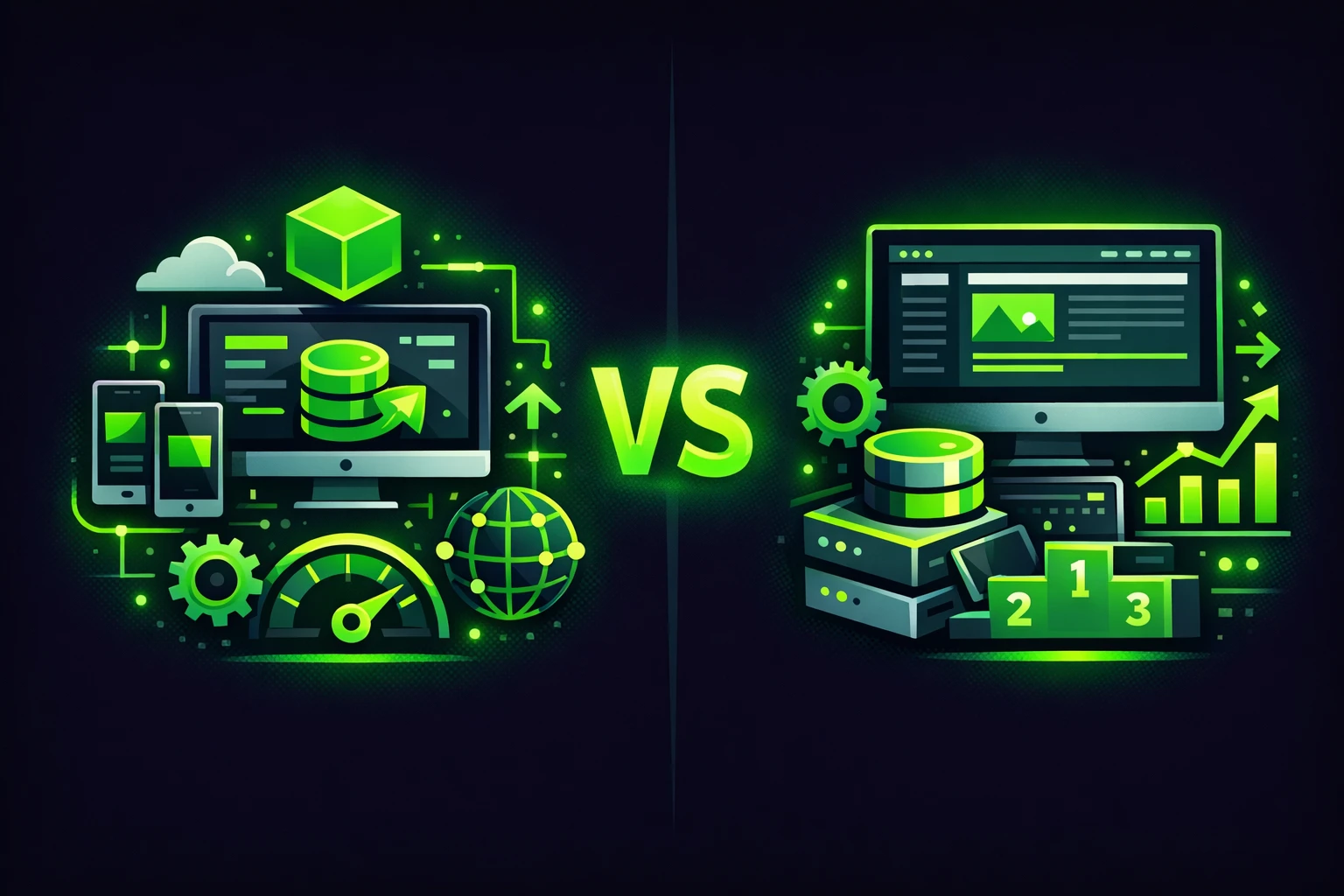
The short, brutally honest answer is this: headless wins at scale and flexibility, while monolithic can win at speed-to-market and simplicity for small-to-medium programmatic efforts. The tradeoffs are obvious, and the winner depends on goals like GEO footprint, AEO needs, and how many pages llm-assisted systems will pump out.
Which should a team pick? If one needs to crush competitors with millions of localized pages and API integrations, headless is the cheat code. If they need an editorial team to launch 5k templated pages quickly, monolithic often gets the job done faster.
Architectural Comparison
Scalability and Performance
Headless CMS separates content from presentation, so one can scale the frontend independently. This makes it easier to deploy global CDNs, edge rendering, and shard APIs for huge programmatic catalogs.
Monolithic CMS bundles the editor, templates, and delivery in one app, which simplifies deployment but creates scaling bottlenecks. When a site jumps from 10k to 1M programmatic pages, monolithic systems often require heavy lifting and hardware upgrades.
Speed to Index and Rendering
Headless setups excel with static generation and incremental builds, which serve ultra-fast HTML for bots and users. That speed helps search engines crawl and index programmatic pages more efficiently, especially when paired with proper schema markup and sitemaps.
Monolithic systems often render on the server and can use efficient caching layers, so initial projects feel faster to launch. But caching complexity grows as page count rises, and cache misses on 100k unique programmatic pages can wreck crawl budgets.
Developer Velocity and Editorial Workflow
Developers love headless because APIs, microservices, and frameworks let them iterate without breaking editors. It’s ideal for teams who want multiple frontends, mobile apps, and personalization engines hooked into content APIs.
Editors prefer monolithic CMS for its WYSIWYG and plugin ecosystem. When time-to-launch matters, monolithic wins the MVP race, but it can become a maintenance nightmare once programmatic templates multiply.
SEO Implications
Programmatic SEO Fundamentals
Programmatic SEO is about templating, scale, and automation to capture long-tail intent. Whether headless or monolithic, schema and schema markup are non-negotiable for visibility in AEO and SERP features.
They should think in terms of crawl budget, canonicalization, and thin content mitigation when generating tens of thousands of pages. An llm can create copy quickly, but it often needs human rules and filters to avoid producing slop at scale.
GEO, AEO, and Localization
Headless shines for GEO-driven sites because one can dynamically generate hreflang, regional sitemaps, and localized schema without duplicating the entire backend. That reduces overhead while improving AEO signals for answers and featured snippets.
Monolithic systems can handle localization, but they usually do it by cloning templates and creating separate content entries. That works for hundreds of regions, but it becomes fragile when handling thousands of locale-variant pages.
Structured Data and Discoverability
Both architectures can implement schema markup, but headless allows programmatic injection of structured data at render time, making it easier to tailor schema for different entities. That flexibility is crucial for answer engine optimization where microdata and JSON-LD feed llm and AEO pipelines.
If one wants rich results for product variants, local business listings, or recipe-style programmatic pages, dynamic schema in a headless stack is often easier to maintain and test.
Real-World Examples and Case Studies
RetailMax: 500k Product Variant Pages
RetailMax migrated from a monolithic CMS to a headless stack to support 500k product-variant programmatic pages. They implemented incremental static regeneration, edge caching, and server-side schema injection.
The results: crawl efficiency improved by 70%, organic impressions doubled in six months, and core web vitals stayed stable despite a ninefold traffic increase. That’s scale-driven SEO working as intended when paired with disciplined optimization.
TravelCo: 15k GEO Destination Pages
TravelCo launched a GEO-heavy programmatic campaign on a monolithic CMS. They built templates for 15k city pages with localized schema and automated sitemaps. They ranked quickly for low-difficulty queries and captured early traffic.
However, when they tried to localize more aggressively and integrate a personalization API, the monolithic backend became a chokepoint and required replatforming to a headless architecture six months later.
Step-by-Step Implementation Guides
Headless CMS: Programmatic SEO Setup
- Define the content model for entities and attributes, including schema fields for JSON-LD output.
- Create templates in the frontend framework that assemble content and structured data at build or render time.
- Implement incremental static generation or on-demand rendering with CDN edge caching to serve millions of pages fast.
- Automate sitemap generation and index controls, and throttle programmatic page creation to protect crawl budget.
- Use llm for draft copy generation, but run quality filters and human review to avoid slop.
Monolithic CMS: Programmatic SEO Setup
- Design the templating logic inside the CMS and create content importers for bulk entity ingestion.
- Add plugins or modules to output schema markup and dynamic metadata for each template.
- Configure server caching, automated sitemap exports, and robots rules to manage crawl behavior.
- Use scheduled jobs to generate or refresh pages, and monitor server load to avoid timeouts during big updates.
- Apply llm-assisted content sparingly and run editorial QA to keep thin content from spreading.
Pros and Cons
Here’s a quick read for teams that like blunt lists.
- Headless Pros: scalable, flexible schema, better for GEO and AEO, works well with llm pipelines and microservices.
- Headless Cons: higher initial engineering cost, longer initial launch, more moving parts to manage.
- Monolithic Pros: faster MVP, simpler editorial UX, lots of plugin support, cheaper short-term.
- Monolithic Cons: scaling pain, fragile at millions of pages, harder to integrate modern AEO/llm tooling.
Decision Framework
One should ask three pragmatic questions when choosing: Is the scope hundreds or millions of pages? Is localization across GEOs critical? Does the team have engineering bandwidth for a headless stack?
If the answer leans toward massive scale, complex integrations, or aggressive AEO strategies, headless wins. If the goal is quick deployment, limited pages, and editorial simplicity, monolithic can be the right tool.
Conclusion
When comparing headless cms vs monolithic cms for programmatic seo, the final judgment comes down to scale, speed, and the ability to implement robust schema markup and GEO strategies. Headless gives long-term domination for teams willing to invest in engineering, while monolithic provides fast initial wins.
They should pick the architecture that maps to measurable outcomes, not ideology. In the end, the team that treats llm as a tool, uses schema like oxygen, and optimizes for crawl budget will crush competitors and get the rankings that matter.