How to Harness Social Listening for Programmatic Content Ideation: A Step‑by‑Step Guide to Boost Audience Engagement
Published January 17, 2026. This guide gets brutally practical about social listening for programmatic content ideation. It doesn't flirt with platitudes or AI-speak; it shows the workflow that crushes competitors and actually moves metrics.
Why social listening matters for programmatic content ideation
Social listening isn't just vanity metrics and PR alerts anymore. It's the raw input for programmatic campaigns that need relevance at scale.
One can turn chatter into audience-segmented creative variations, informed by GEO trends, AEO intents, and timely cultural hooks. That means less guesswork and more targeted hits with the right messaging at the right moment.
Core concepts to know first
What is social listening?
Social listening is monitoring public conversations for sentiment, themes, and emerging signals. It catches topics, voice, irony, and problems that signals market demand.
One should use it to feed programmatic content ideation pipelines — not to admire how clever the internet is. Results over feelings.
Programmatic content ideation defined
Programmatic content ideation is the automated or semi-automated generation and selection of creative concepts for ads, landing pages, or organic posts. It uses signals to pick ideas, test them, and scale winners.
When social listening and programmatic engines join forces, they produce tailored messages that respect GEO nuances and AEO (answer engine optimization) patterns.
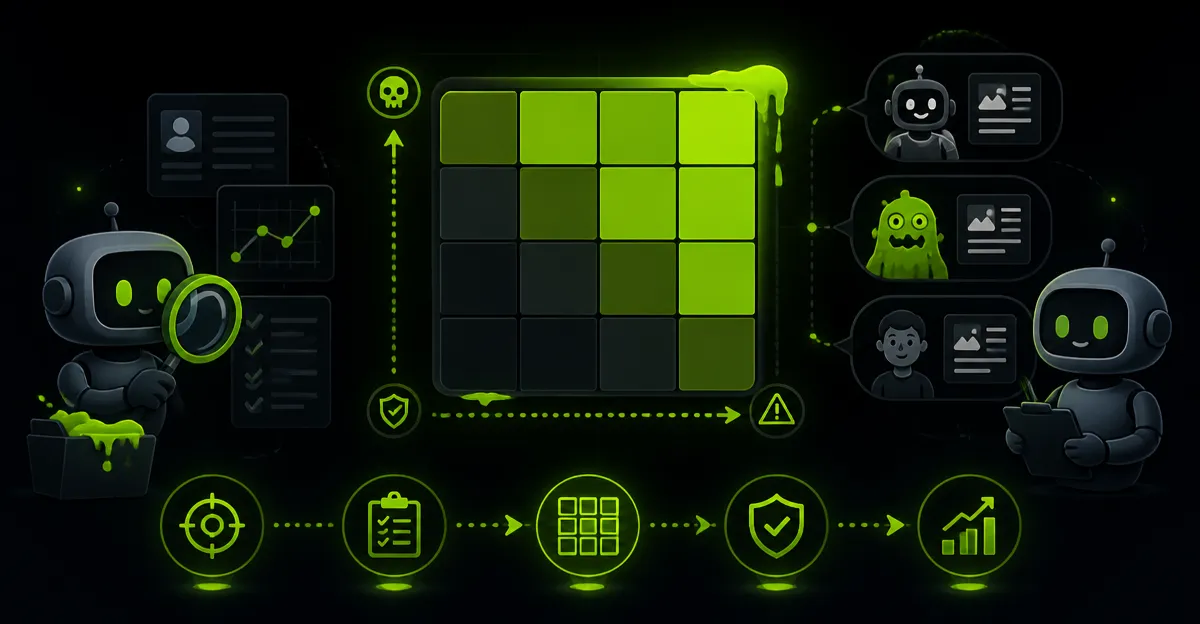
Step-by-step workflow: from chatter to creative
This step-by-step process is operational. One will see tooling, prompts for an llm, schema markup pointers, and real-world tweaks for performance.
1) Set goals and KPIs
Decide what 'win' looks like before listening. Is it clicks, conversions, time on page, or sentiment shift? KPIs steer ideation and optimization logic.
Example KPIs: CTR uplift by GEO, conversion rate increase, or topic-level engagement lift week-over-week.
2) Define sources and scope
Choose sources: Twitter, Reddit, Instagram captions, TikTok comments, product reviews, niche forums, and brand mentions. The broader the source set, the richer the ideation pool.
Include GEO filters to capture local slang and cultural triggers. That matters when one wants programmatic creative tailored by region.
3) Collect and normalize signals
Aggregate mentions, hashtags, URLs, sentiment scores, and entity tags. Normalize timestamps and GEO metadata so trends are comparable across sources.
Use automated pipelines to tag intent (buy vs research), AEO-related questions, and recurring pain points. This becomes the feature set for content generation.
4) Cluster topics and rank by impact
Run clustering to surface high-frequency themes, emergent memes, and complaints. Then rank clusters by reach, sentiment, and conversion intent.
One can weight clusters differently: product issues might deserve immediate reactive content, while trending cultural hooks earn experimental programmatic variations.
5) Feed the llm with structured prompts
Don't throw raw tweets at the model and hope. Construct templates with schema-like fields: topic, sentiment, GEO, intent, and desired CTA. That drives predictable outputs.
Sample llm prompt: "Given topic: 'return policy confusion', GEO: 'Texas', intent: 'purchase', tone: 'wry helpful', produce 4 ad headlines and 4 short descriptions optimized for CTR."
6) Generate creative variations programmatically
Produce multiple headlines, descriptions, visuals, and model-driven hook lines for each cluster. Programmatic platforms can assemble variations into live tests.
Use A/B/n strategies and automation rules to pause losers and scale winners without manual babysitting.
7) Add schema markup and AEO signals to content
When deploying content, embed schema markup for article, product, or FAQs where applicable. That helps AEO performance and gives search engines structural context.
Example snippet (JSON-LD) one should place on landing pages:
<script type='application/ld+json'>{
  "@context": "https://schema.org",
  "@type": "Article",
  "headline": "How social listening turned a local trend into a 32% CTR boost",
  "datePublished": "2026-01-17",
  "author": {"@type": "Organization", "name": "CaseBrand"}
}</script>
8) Measure, iterate, and automate
Connect measurement back into the listening loop. Which topic clusters drove conversions? Which GEO messages flopped?
Configure rules for programmatic shifts: pause underperformers, mutate creative templates, or boost spend on winners automatically.
Practical examples and a mini case study
Example: GreenSip beverage
GreenSip used social listening for programmatic content ideation to attack a trending hydration meme in the Southeast. They filtered by GEO, clustered topic variants, then generated 50 ad variations via llm prompts.
Within two weeks, one message — a humorous twist on local idiom — lifted CTR by 32% and reduced CPA by 18% in targeted counties. Results weren't luck; they were signal-driven testing.
Comparison: manual ideation vs programmatic listening-driven ideation
Manual ideation is slower and biased by team taste. Programmatic listening-driven ideation uses real signals and scales more variants faster.
Pros of programmatic approach: speed, GEO sensitivity, measurable scaling. Cons: needs decent tooling and governance to avoid garbage outputs — because llm slop happens when prompts are sloppy.
Tools, prompts, and schema checklist
Tools: Brandwatch, Meltwater, Sprout, Pulsar, custom ELT, an llm provider, and a programmatic creative platform. One shouldn't rely on any single vendor for full coverage.
Prompt template: include explicit fields for topic, sentiment, GEO, intent, CTA, allowed tokens, negative examples, and desired format. That brings repeatability.
Schema checklist: Article, FAQ, Product, Breadcrumb, and Review schema markup where appropriate. AEO performance loves structured answers and question-based content.
Pros, cons, and hard truths
Pros
- Faster ideation cycles and more variants for programmatic testing.
- GEO-aware creative that speaks local language and culture.
- Better alignment with AEO and SEO due to schema and structured signals.
Cons
- Garbage in, garbage out: noisy data produces weak creative unless filters are solid.
- Requires engineering to normalize and automate pipelines.
- Over-reliance on llm without human guardrails creates off-brand or risky messaging.
Final checklist before launch
- Define KPIs and GEO segments clearly.
- Ensure source diversity for listening data.
- Tag intent, sentiment, and AEO question patterns.
- Use structured prompts and validate llm outputs with brand rules.
- Embed schema markup and test search/AEO behavior.
- Set automation rules for scaling and pausing creative.
Conclusion
Social listening for programmatic content ideation isn't a fancy trend; it's the practical cheat code to keep campaigns relevant. One can stop guessing and start operating with signals that map to real intent and GEO nuance.
Be blunt: AI slop will show up, but disciplined pipelines, schema markup, and llm prompt governance turn that slop into scalable performance. Crush competitors or get buried — that's the game. This guide gives the pipeline; one has to run it.