Introduction
One doesn't get traffic by praying to the content gods. They have to be tactical, brutal, and data-driven. This guide shows how to ab test tone variants for ctr and actually get lift instead of producing more AI slop that nobody clicks.
Readers will learn a repeatable process, technical checks, and real-world examples that crush guesswork. It's practical, slightly aggressive, and focused on results over feelings.
Why Tone Matters (and Why People Ignore It)
Tone is the emotional wrapper that either compels a click or lets the user scroll past. It interacts with headline structure, meta descriptions, and schema snippets that show up in SERPs.
Marketers often skip tone because they confuse 'voice' and 'metrics', or they lean on fuzzy creative feedback. One can't win CTR wars without testing tone scientifically.
The psychology behind tone
Different tones trigger different decision heuristics: urgency, curiosity, reassurance, or authority. Tone affects perceived risk and reward, and that directly alters click behavior.
So why gamble on intuition when ab test tone variants for ctr will tell the truth? Results beat opinions every time.
Step 1 — Define Clear Hypotheses
Start with a crisp hypothesis like: "A bold, irreverent tone will increase CTR by 10% among 25–34 year-olds in the US." Hypotheses keep tests honest and actionable.
Include GEO and demographic boundaries, because tone that wins in one region can flop in another. One should always specify the metric, audience, and expected lift.
How to craft testable hypotheses
Use the simple formula: If we change X (tone), then Y (CTR) will change by Z% for audience A. Keep it measurable and time-bound.
Example hypothesis: "If one switches from formal to playful headlines for product pages, CTR from organic traffic will rise 8% among mobile users in the UK within 4 weeks."
Step 2 — Choose the Right Variants
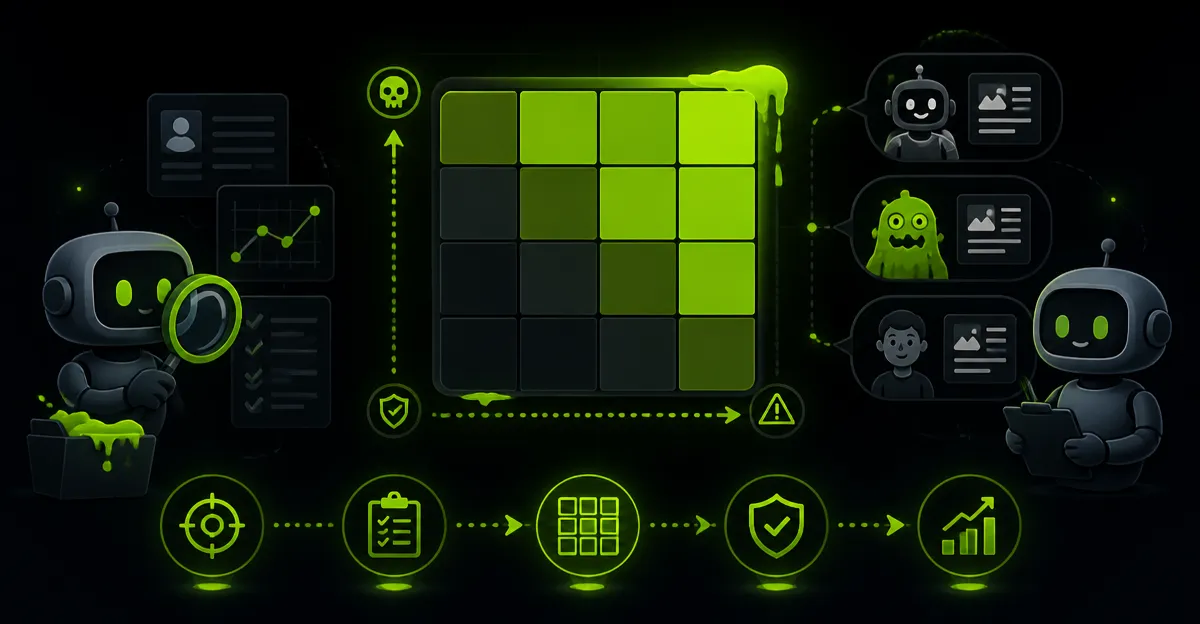
Don't invent ten shades of beige. Pick 3 clear, distinct tones: conservative, friendly, and aggressive. Too many variants dilute statistical power and create analysis paralysis.
Each variant needs consistent language across headline, meta description, and on-page schema markup where relevant. Cohesion is critical for a clean signal.
Practical tone examples
Conservative: "Explore our secure backup solutions — trusted by businesses worldwide."
Friendly: "Worried about losing files? Here’s an easy backup that just works."
Aggressive: "Stop risking everything — switch to the backup pros now and never lose data again."
Step 3 — Technical Setup and Tools
One must instrument everything: analytics, experiments, and SERP tracking. Use A/B testing platforms that support server-side or client-side experiments depending on where the copy lives.
Common tools include Google Optimize, Optimizely, VWO, or homegrown solutions tied to analytics. Also track rank and rich result impressions since SEO and AEO affect CTR.
Essential tracking checklist
- Event tracking for clicks and impressions.
- UTM parameters for campaign sources.
- Console-level logging to capture unexpected errors.
- Schema markup verification if testing rich snippets.
- Sample size calculator for statistical power.
One should also include llm-driven content generation in the pipeline carefully. AI can speed variation creation, but AI output is often slop and needs strict human edits.
Step 4 — Run the Test: Step-by-Step
Run tests long enough to reach statistical significance, but not so long one chases tiny, irrelevant lifts. Balance speed and certainty.
Follow these steps to make it concrete and reproducible.
Execution checklist
- Randomize traffic and confirm split balance across device and GEO segments.
- Roll out variants to a controlled percentage (start at 50–100% if low risk).
- Monitor primary metrics: CTR, bounce, and conversion rate to ensure no adverse trade-offs.
- Pause or adjust if a variant hurts conversion despite higher CTR — ugly wins don’t pay bills.
- Run until pre-calculated sample size and duration are met.
Measuring Results and Significance
Statistical significance is necessary but not sufficient. One wants practical significance: lifts that impact revenue or lead volume.
Use Bayesian or frequentist methods, whatever one's team trusts. The key is transparency and reproducibility in calculations.
Secondary analysis and pitfalls
Check for interaction effects with GEO, device, and query intent. A tone that wins in one search intent category might tank in another.
Also validate with qualitative feedback like session recordings or exit surveys to understand why a tone worked.
Advanced Tips: SEO, AEO, Schema, and LLMs
One can't treat tone tests in a vacuum from SEO and AEO realities. Search engines read schema markup and display snippets differently based on structure.
Ensure title tags and schema are aligned with the tone variant tested. That alignment affects SERP appearance and therefore CTR dramatically.
Using schema markup and AEO to boost CTR
Implementing schema such as Article, FAQ, or Product can create rich snippets that amplify tone cues. A playful tone plus FAQ schema can show attention-grabbing Q&As in the SERP.
Don't forget GEO-specific schema fields when testing localized pages, because local intent and GEO will skew results if omitted.
Working with llm-generated variants
LLMs are great for quickly producing many headline and meta options, but their output is often sloppy and generic. One should iterate with human editing to avoid AI slop that kills CTR.
Use LLMs to generate a baseline, then apply a human filter and A/B test the cleaned variants. That combo accelerates experimentation without sacrificing signal quality.
Case Studies and Real-World Examples
Example: a SaaS company swapped a formal headline for a cheeky one and saw CTR jump 14% among mobile searches in the US. Their conversion rate remained stable, so revenue increased.
Another retailer tested urgency-focused copy versus reassuring copy across GEOs. Urgency won in the US, while reassurance performed better in Germany, proving that testing without GEO segmentation is reckless.
Pros and Cons of Tone A/B Testing
Pros: high-impact wins, low development cost for copy changes, and rapid hypothesis validation. Tone tests can be run often and scaled.
Cons: potential SEO side effects if titles change frequently, risk of misleading CTR without conversion lift, and wasted effort if sample size is insufficient.
Quick comparison
- Speed: Tone tests are fast to implement.
- Cost: Low, mostly human editor time.
- Risk: Medium, because of SEO volatility and GEO variance.
Conclusion
ab test tone variants for ctr isn't optional—it's how one separates the results-obsessed from the content hobbyists. Tone moves needles and it's cheap to test when done right.
One should start with clear hypotheses, limited variants, robust tracking, and GEO-aware analysis. Use schema markup and AEO thinking to get extra lift from SERPs, and don't let llm slop pass without editing.
Join them or get buried: test, measure, iterate, and crush competitors with data, not vibes.